
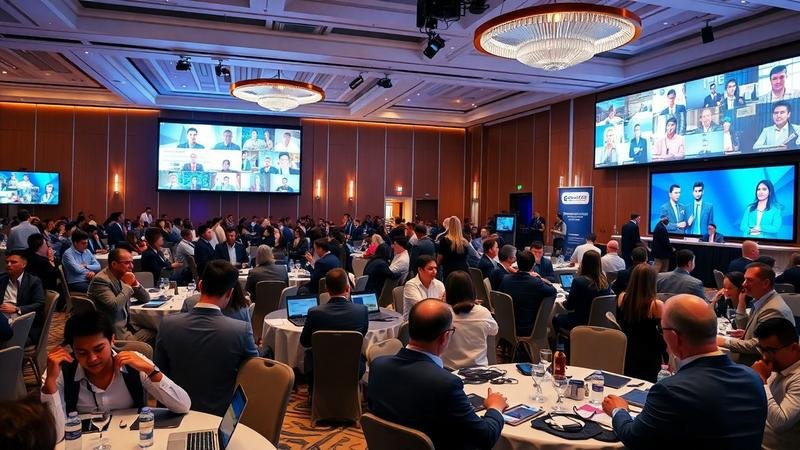
Hybrid events have become a cornerstone in the B2B sector, revolutionizing how companies approach conferences and meetings. As the landscape of event management trends evolves, staying abreast of these changes is crucial for maintaining a competitive edge. This article aims to illuminate the most significant trends in hybrid event management for 2026, providing insights that are essential for strategic planning and successful execution.
- Event Management Trends for B2B Conferences in 2026
- Personalization as a Driving Force
- Sustainability Practices in Hybrid Events
- Enhanced Engagement Tools
- Advanced Networking Opportunities
- Integration of Momenttuns Technology
- Security Enhancements for Virtual Attendance
- The Role of AI in Event Management
- Data-Driven Decisions
- Accessibility and Inclusivity
- Conclusion
Event Management Trends for B2B Conferences in 2026
Event management trends are redefining the scope and impact of hybrid events in 2026. These events seamlessly blend in-person and virtual interactions, offering flexibility and expanded reach. The significance of hybrid events lies in their ability to cater to diverse audiences, accommodating various preferences and enhancing overall accessibility. Understanding the relevance of these trends is key to leveraging their potential in the B2B sector.
Personalization as a Driving Force
A prominent element of event management trends is the shift towards personalized experiences. In 2026, the use of AI and data analytics has become integral in crafting customized content and engagement strategies. By analyzing attendee data, organizations can tailor their offerings to meet specific needs and preferences, thereby enhancing satisfaction and impact. Other sectors have successfully adopted personalization strategies, as seen in industries highlighted by Forbes.
Sustainability Practices in Hybrid Events
Event management trends underscore the importance of sustainability in hybrid events. As environmental concerns grow, there is a heightened focus on adopting eco-friendly practices. This includes the use of sustainable technologies and reduction of carbon footprints, which are becoming standard practices at major conferences. Successful implementations serve as models for others aiming to integrate sustainability into their event strategies.
Enhanced Engagement Tools
Innovative engagement platforms are a key component of event management trends in 2026. The utilization of VR and AR technologies is transforming how attendees experience events, making them more immersive and engaging. Additionally, live polls and interactive sessions are being integrated to foster real-time participant interaction, thus elevating the overall event experience.
Advanced Networking Opportunities
Event management trends are advancing networking opportunities, making them more effective and personalized. AI-driven matchmaking apps enable attendees to connect with relevant peers, facilitating meaningful interactions. Moreover, digital platforms now allow for networking beyond the confines of the event, extending opportunities for collaboration and engagement.
Integration of Momenttuns Technology
Momenttuns is at the forefront of leveraging event management trends to offer seamless integration solutions. By deploying state-of-the-art tools, Momenttuns enhances the hybrid event experience, ensuring smooth operations and enriched attendee engagement. Their technology exemplifies how hybrid events can be effectively managed and optimized.
Security Enhancements for Virtual Attendance
Cybersecurity is a critical aspect of event management trends, addressing the challenges posed by virtual attendance. In 2026, advanced encryption methods and rigorous user verification processes have been implemented to safeguard attendee information. Case studies of successful security practices demonstrate the effectiveness of these measures in protecting data.
The Role of AI in Event Management
AI is a pivotal force in event management trends, driving automation across various facets. From managing registrations to collecting feedback and facilitating follow-ups, AI reduces manual workload and enhances efficiency. This automation has significant impacts on staffing requirements, allowing for streamlined operations and cost savings.
Data-Driven Decisions
The ability to make informed decisions is central to event management trends in 2026. By leveraging analytical insights, organizers can track attendee behavior and preferences, enabling them to adapt strategies in real-time. Tools that provide these insights empower event planners to optimize their approaches, resulting in improved outcomes.
Accessibility and Inclusivity
Event management trends in 2026 emphasize accessibility and inclusivity, ensuring universal participation. The adoption of multilingual support and assistive technologies is expanding the reach of events, allowing for diverse attendance. This growth in inclusivity reflects a commitment to creating opportunities for all, regardless of barriers.
Conclusion
In conclusion, the key event management trends of 2026 are shaping the future of hybrid events, offering new avenues for innovation and growth. As these trends continue to evolve, they promise exciting developments that will further transform the B2B conference landscape. Momenttuns stands as a leader in implementing these strategies, driving the industry forward with its cutting-edge solutions.
Explore more about natural anchor text for comprehensive insights into the future of hybrid events.
For additional information on advancements in AI technology for events, visit Harvard Business Review. To learn about sustainable event practices in 2026, check out this BBC article.